Cambridge House Painters
House Painting Company in Cambridge MA
In Cambridge close to half of our homes were built before 1940. From the Victorians and triple deckers of Cambridgeport to the colonials of West Cambridge and the converted two-families off Inman Square. That long history is beautiful but it also means most houses in this city can be carrying almost a hundred years of paint. Layer after layer and almost all of it applied before 1978 when lead paint was still standard.
That’s where we come in. Painting a Cambridge home isn’t about rolling a fresh coat over whatever is already there. When you call us we figure out why the old finish failed before we put anything new on top of it. Our winters push moisture into siding and trim and our summers are humid enough to blister a coat that went on too thick. The older the house the more likely the prep has been skipped by someone before us. We fix the surface first so the finish actually lasts for decades to come.
We paint homes across Cambridge and the surrounding area. Our service areas include Somerville, Arlington, Belmont, Watertown, Medford, and surrounding communities. Interior repaints, full exterior jobs, trim and porch work, cabinet refinishing, and lead-safe prep on pre-1978 homes all fit into our area of expertise. Every project starts off the same with a walk of your property and a conversation about what you are looking to achieve. We’ll explain what needs doing and what doesn’t and give you a clear price and plan before we start any work. A price you can trust and one we will stand behind.
Why Painting a Cambridge Home Is Different
If you have a quote from a contractor who mostly works on newer builds out in the suburbs you likely have a number and a timeline that doesn’t fit the conditions of a Cambridge home. Here’s why houses in our area need a painter who knows them:
Some of the Oldest Housing Stock in America
Close to half of Cambridge homes were built before 1940 and many go back to the 1800s. That means layer after layer of old paint, original wood siding and trim, plaster walls instead of drywall, and oil-based finishes underneath whatever went on last. You can’t just roll latex over an old oil-based trim and expect it to hold. These surfaces take well to a proper job but you need someone who has worked on them and knows what they’re dealing with underneath.
Lead Paint and RRP Requirements
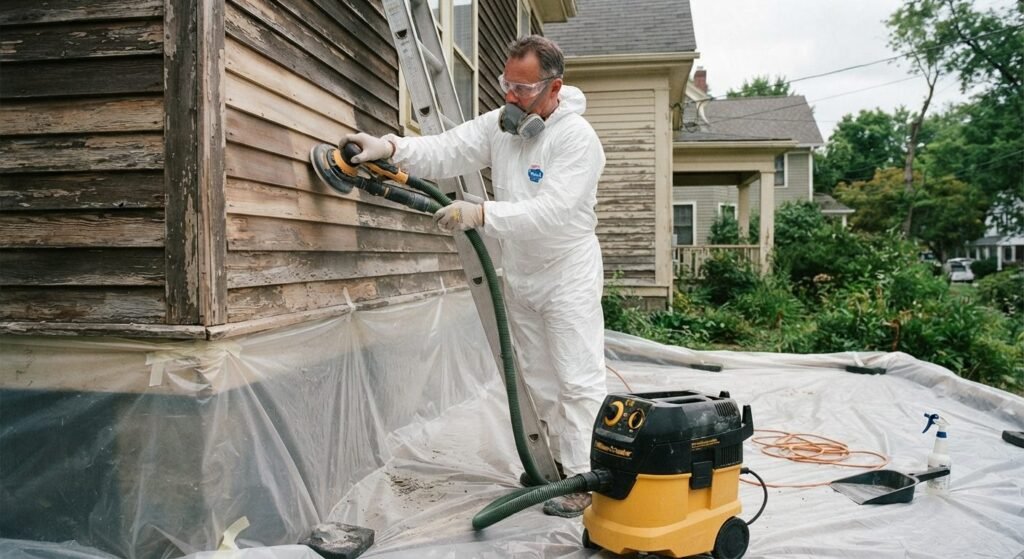
Lead paint was legal in homes until 1978 which covers the overwhelming majority of Cambridge housing. Any contractor disturbing painted surfaces on a pre-1978 home is required to be EPA RRP certified and to follow lead-safe work practices. That means containment, HEPA vacuums, and proper cleanup. Not just a shop vac and a broom. This isn’t a formality, its something we take very seriously and it protects your family during the job. It’s the single most common corner cut by outfits bidding cheap and also one of most negatively impactful to the safety of your home.
Freeze-Thaw and Coastal Moisture
New England winters drive moisture into siding, trim, and window casings and then freeze it. That expansion lifts paint off the surface from underneath which is why so many exteriors here fail on the same elevations every time. Add summer humidity and salt air off the harbor and you have a climate that punishes a thin or rushed coating. Prep and product selection here have to account for that in order to give you a paint job that will last decades.
Triple Deckers and Tight Lots
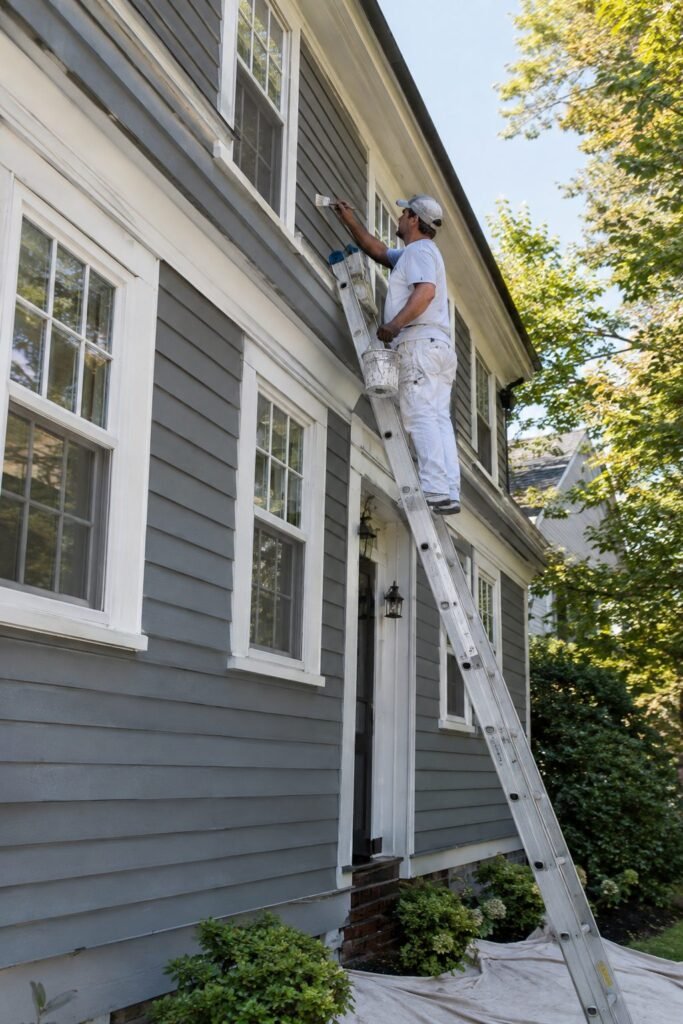
A lot of Cambridge housing is triple deckers and two-families packed close together on small lots. This changes a job meaning that staging is tighter, ladder access is limited, and neighboring properties are feet away. You’re often working around tenants and street parking. A painter used to open suburban lots will underestimate the setup time on a house like this and that’s usually where a low bid turns into a schedule problem. Not to mention additional costs they will charge you for once they learn the difficulties of our homes.
What to Expect
Walkthrough
We walk the property with you through all your areas of concern. We look at where the existing finish is failing and why. We will review what the substrate is underneath and whether there is rot, moisture, or old oil-based paint we need to work around.
Honest Scope
We explain what needs doing and why in a way everyone can understand. Which surfaces need full prep and which just need a coat. Where a repair makes more sense than paint and what you can leave for another year. You will understand the real condition of your surfaces before you spend a dollar.
Written Estimate
An itemized no hassle estimate. You will see exactly what is driving the cost of your project and where there is room to adjust the scope to fit your situation.
Prep Work
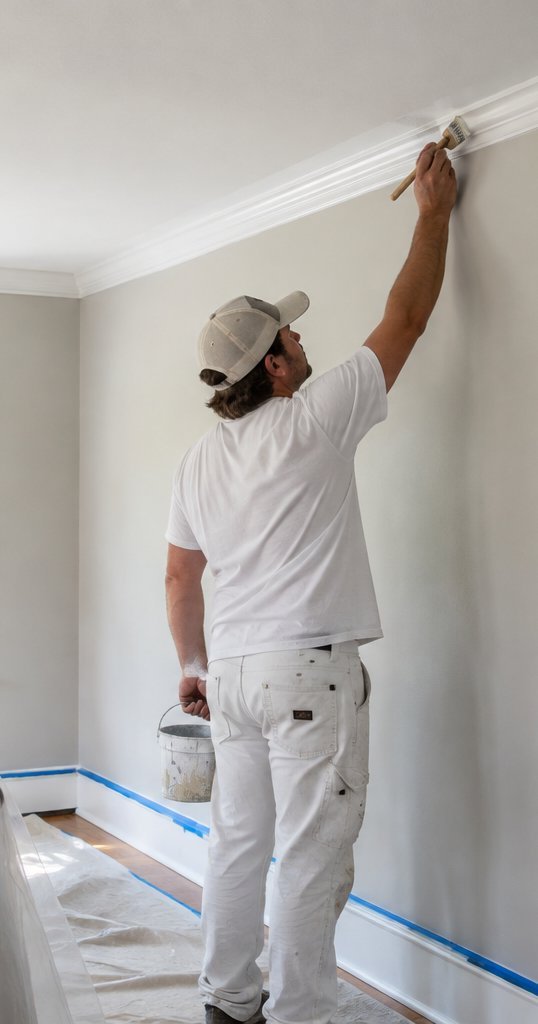
Insured crews doing work the right way. Scraping, sanding, washing, patching, caulking, and priming. On pre-1978 homes we follow lead-safe RRP practices with proper containment and cleanup. This is the part that decides whether the finish lasts.
Paint and Finish
The right product for the surface and the exposure it gets. We apply full coats at proper spread rate, cut clean lines, and do not stretch a gallon further than it should go. Thin coats look fine for a season but will fail early.
Final Walkthrough
We walk the completed work with you and go over how to care for the finish. We will make sure you are completely satisfied and fix anything you don’t think is right. Your property gets left clean with furniture and landscaping back where they belong.
Insured, Experienced, and Built to Last
A full exterior or interior repaint is a real investment in your home and you deserve to know it is protected. We carry full insurance on every project and we back our work in writing. If a finish fails early because of how we prepped or applied it we will come back and make it right no questions asked.
We work with proven methods and stand behind every job. When you call us you get an honest assessment, a clear scope, and workmanship built to hold up through New England winters and humid summers. If you are shopping around that is the smart move just make sure whoever you hire carries real insurance. They must also be RRP certified for pre-1978 homes and put their scope in writing. You should be protected and get the highest quality finish possible.
How much does it cost to paint a house in Cambridge?
Exterior work is driven almost entirely by prep. A house with sound siding and a finish in decent shape costs a fraction of one that needs heavy scraping, rot repair, and lead-safe containment. Square footage matters less than condition. We give you an itemized estimate so you can see exactly which line items are driving the number and where you have room to adjust.
Do I need a lead-safe certified painter for my home?
If your home was built before 1978 the answer is yes. EPA rules require RRP certification for any contractor disturbing painted surfaces on a pre-1978 home and that covers the large majority of Cambridge housing. It means containment, HEPA vacuums, and proper cleanup rather than a shop vac and a broom. Ask any painter you are considering for their certification before they start.
When is the best time to paint the exterior of my house?
Late spring through early fall. Most exterior products need surface temperatures to stay above roughly 50 degrees and New England humidity slows cure time in the colder seasons. We book out early for summer so if you know you want exterior work done next year it is worth calling in winter rather than waiting until June.
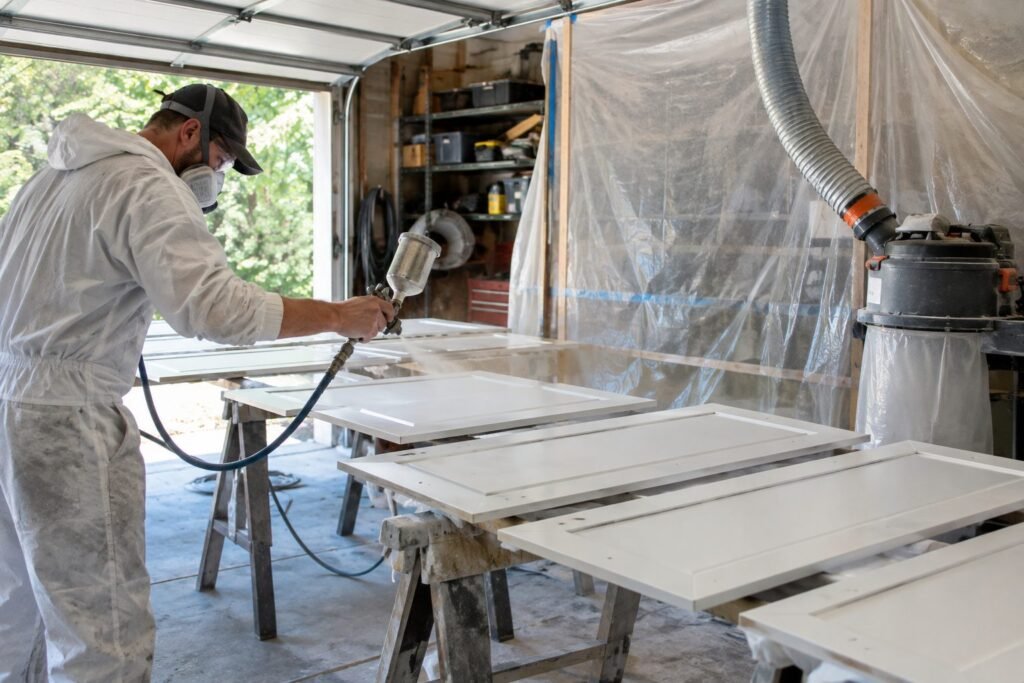
Is refinishing cabinets worth it compared to replacing them?
If the boxes are solid and the layout works the answer is almost always. New cabinets run into five figures and take weeks of your kitchen being unusable. Refinishing costs a fraction of that and takes days. Replacement makes more sense when the boxes are failing or you are changing the layout and we will be upfront with you and tell you when that is the case.
What Drives the Cost of a Paint Job
- Surface Condition – This is the big one. A house with a sound existing finish needs washing and two coats. A house with peeling caulk or bare wood needs scraping, sanding, and priming before anything else happens. Two houses the same size can be double the price apart based on condition alone.
- Prep Scope and Lead-Safe Requirements – On pre-1978 homes when you are disturbing painted surfaces you must use containment, HEPA cleanup, and RRP-certified crews. That adds labor and it is not optional. Anyone quoting a pre-1978 Cambridge home without accounting for it is either not certified or not planning to follow the rules.
- Access and Staging – Three story homes, tight lots, and three-story elevations take real setup time. Whether we can work off ladders or need staging and how much of the house is reachable all play into cost. What we have to protect on the neighboring property all move the number.
- Product Selection – The right coating for the exposure costs more than builder-grade and lasts years longer. South-facing elevations and anything taking weather directly need a better product. We will tell you where it matters and where it does not.